Native Plants
The Hawaiian Islands are considered the most isolated in the world as they lie at least 2,000 miles from any continent, and 1,000 miles from any Pacific atoll. The native plants of Hawaiʻi developed over millions of years through chance colonization. It is estimated on average only once every 98,000 years a species of plant was able to successfully establish itself in Hawaiʻi (Atlas of Hawaiʻi 105). Plants reached the islands over these many years by:
1. Bird Wing Dispersal: Birds can carry inadvertent hitchhikers on feathers or muddy feet. They also discharge ingested seeds. The ʻōhelo berry is a distant relative of the blueberry and cranberry and thought to be originally brought here through bird dispersal.
2. Wind Dispersal: Wind and air currents can disperse lightweight seeds. Ancestors of the ʻōhiʻa can be found in New Zealand and have very lightweight seeds. It is thought that these seeds were carried along in the Pacific and those islands and atolls provided various stepping stones until the seeds were finally carried through the air to Hawaiʻi.
3. Water Dispersal: Ocean currents can transport large seeds that are capable of floating, or seeds can arrive through rafting – by being lodged and carried in other floating debris. The Hawaiian māmane is related to the Pacific species called Sophora. These seeds can survive in seawater for over three years.
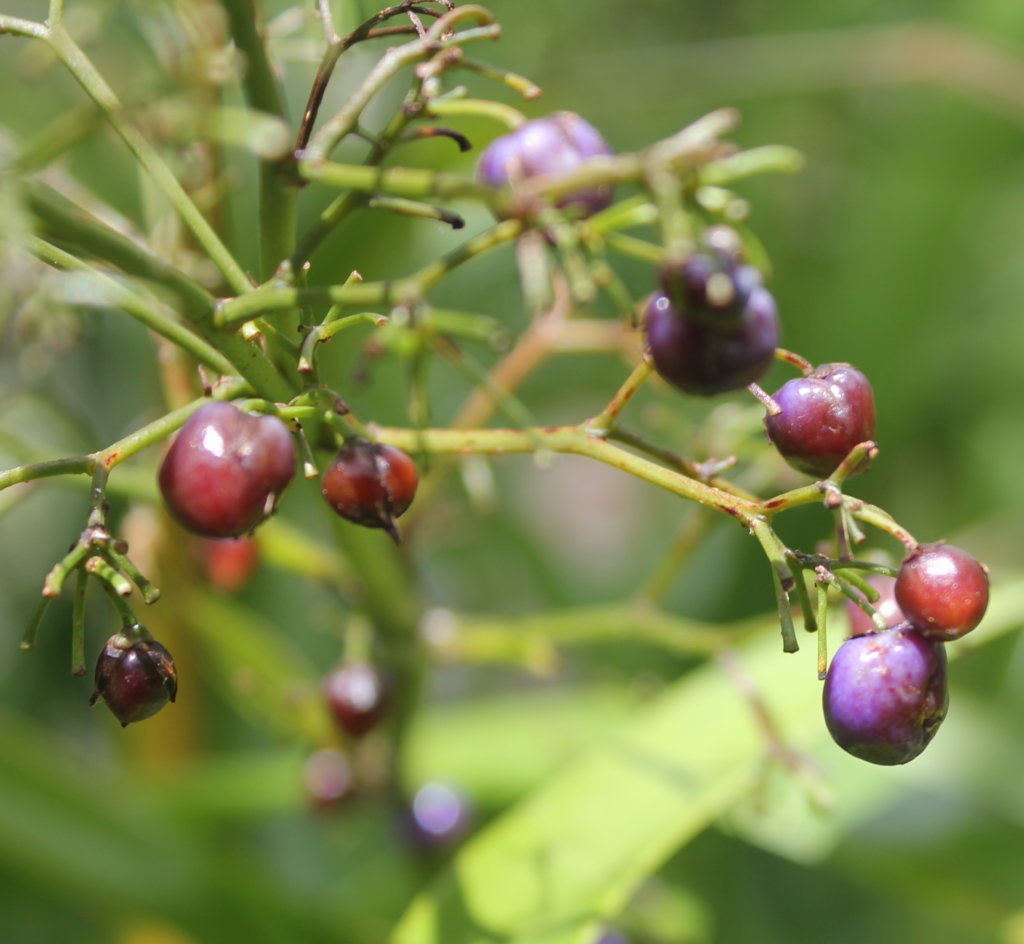
(Dianella sandwicensis)
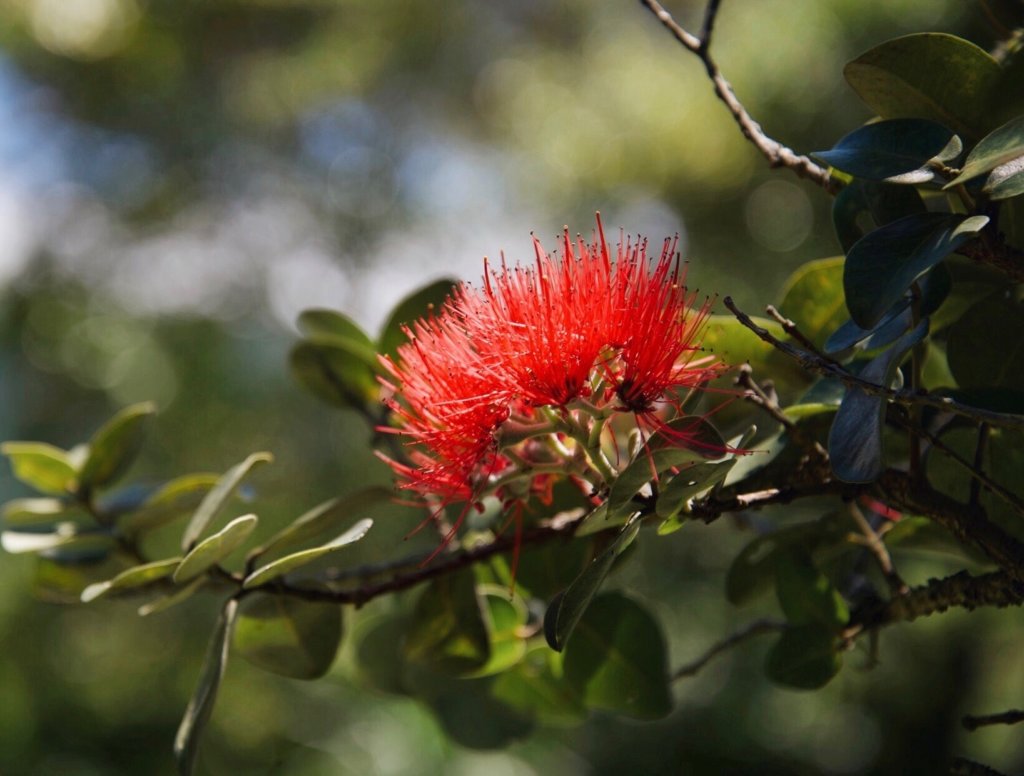
(Metrosideros polymorpha)
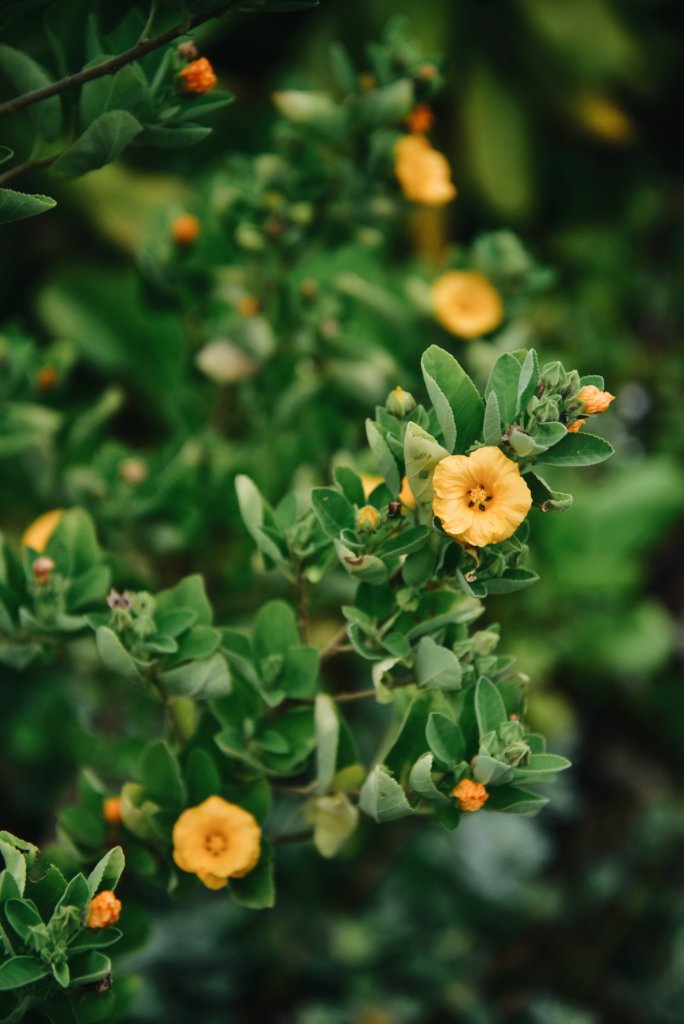
(Sida fallax)
Native Hawaiian plants evolved over hundreds of years with their ecosystem to live in balance with surrounding organisms. They began as Native Indigenous species and after hundreds of years, morphed into itsʻ own unique sub-species, shaped by their environment. In adapting to their ecosystem, they learned to live harmoniously with their surrounding. A natural check-and-balance system is developed where diversity can thrive and each species has just enough resources. There are two types of native plants:
Native Endemic – arrived before people, found only in Hawaiʻi.
These plants came to Hawaiʻi before humans through natural means of Wind, Waves, or Wings. Over time, they established themselves in their new home and evolved into a unique species found nowhere else in the world. This means that after their arrival, as these plants adapted to their new environment, they changed so much from their original ancestors that they transformed into a new species.
Native Indigenous – arrived before people, found here and elsewhere.
Those plants also came to Hawaiʻi before humans through natural means of Wind, Waves, or Wings. Unlike endemic plants, these plants are found in Hawaiʻi and other places around the world.
Endemic and indigenous plants are considered native plants. Of all the major island groups on our planet, Hawaiʻi has the highest degree of endemism in its terrestrial plants and a much greater degree of endemism than found on continents. About 90% of the 1,000 native flowering plants and 70% of the 150 native ferns are endemic.
Threats
While Hawaiʻi may well be considered an evolutionary capital of the world, the crown jewel of our national natural heritage, Hawaiʻi also has the unfortunate distinction of being the endangered species capital of the world. It comprises less than one percent of the total U.S. land area, yet over 30% of the species on the U.S. threatened or endangered list are Hawaiian, and almost 78% of those are plants (Atlas of Hawaiʻi 150-2). The term endangered refers to a species that is in danger of extinction. The term threatened refers to a species that is likely to become endangered in the foreseeable future. Hawai‘i has 272 plants considered endangered under the U.S. Endangered Species Act, but many threatened species have not yet been officially proposed or listed.
Many of the native plants are on the endangered species list and others are threatened or at-risk species. The primary threats to Hawai‘i’s endangered, threatened and at-risk plants are introduced plants and animals, disease and humans.